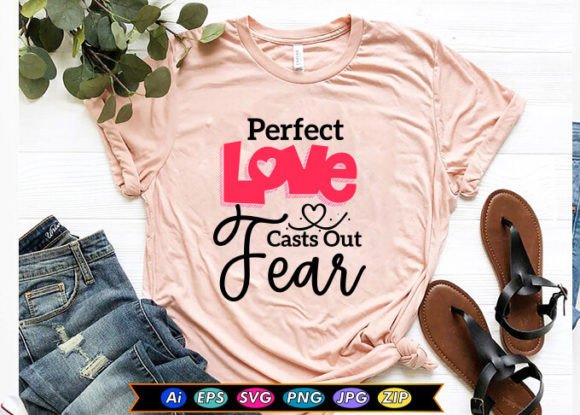
Reviewing Perfect Love Casts out Fear for Embroidery
As a designer who spends more time staring at stitch simulations than I do sleeping, I have learned that not every pretty graphic translates well to thread. We often see T-Shirt Designs and digital Graphics that look stunning on a screen but turn into a tangled mess under the needle. That is why I approach every new asset with a critical eye, looking beyond the aesthetic to the practical application. Recently, I evaluated the Perfect Love Casts out Fear design, and I want to share my honest take on how it performs in real-world embroidery scenarios.
First Impressions: Mood and Visual Personality
The phrase itself carries weight. It is comforting, spiritual, and bold. When I first loaded the Perfect Love Casts out Fear file, I was looking for clarity. Does the typography support the message? Is the layout balanced? For a text-based design, legibility is everything. If the letters are too thin or the spacing too tight, the embroidery machine will struggle to create clean edges.
This design feels grounded. It does not rely on overly complex flourishes that might get lost in the fabric texture. Instead, it offers a clean, readable structure that suggests confidence. For a crafter or small business owner, this means the design is versatile. It fits naturally into projects where the message is the hero, such as personalized gifts, nursery decor, or faith-based apparel. The visual personality is calm yet assertive, making it suitable for both modern minimalist styles and traditional handmade aesthetics.
Real-World Application: From Screen to Stitch
To truly test a design, you have to imagine it on actual products. I pictured this design on a heavy cotton tote bag. The sturdy fabric would support the stitches well, allowing the text to stand out without puckering. Imagine a customer walking into a boutique or browsing an Etsy shop, seeing a neutral-colored tote with this reassuring message embroidered in a contrasting thread color. It creates an immediate emotional connection.
I also considered it for sweatshirt embroidery. A crewneck sweatshirt provides a large, flat canvas. Here, the Perfect Love Casts out Fear design could serve as a central chest piece or a smaller left-chest logo. The key is scale. On a larger garment, you have room to let the letters breathe. On a baby onesie, however, you must be cautious. Baby embroidery requires softer threads and lower stitch density to keep the fabric comfortable against sensitive skin. If the design is too dense, it could make the garment stiff and uncomfortable.
For those running a craft business, this design is a strong candidate for holiday embroidery or wedding gifts. Think of a white linen tea towel or a pillow cover for a newlywed couple. The sentiment aligns perfectly with themes of commitment and peace. As a digital product seller, offering this as part of a bundle for custom apparel could increase your average order value, provided you market it correctly to your audience of makers and hobbyists.
Technical Considerations and Fabric Choices
While the design is appealing, technical execution is where many projects fail. You must consider the fabric texture. Embroidering on textured fabrics like terry cloth or waffle knit requires adjustments. The needles can skip, or the thread can sink into the pile. For these materials, I recommend using a cut-away stabilizer to provide lasting support, especially if the finished product will be washed frequently.
Dark fabric presents another challenge. If you are stitching light thread on a black hoodie, you need high contrast. Ensure your thread colors pop. A satin stitch might look elegant, but if the letters are small, a fill stitch or even a simple running stitch outline might offer better durability and clarity. Always check the stitch density. High-density areas can cause puckering, particularly on stretchy fabrics like jersey knits used in t-shirts. Using a proper stabilizer is non-negotiable here.
Curved surfaces, such as caps or hats, require extra attention. The Perfect Love Casts out Fear design needs to be centered perfectly. If the text is too long, it might wrap awkwardly around the curve, distorting the letters. In such cases, consider breaking the design into two lines or reducing the size to fit the front panel comfortably. An embroidered patch is another excellent alternative for caps, allowing you to stitch the design on a flat piece of fabric before attaching it, ensuring crisp edges and professional presentation.
Enhancing Product Value and Brand Consistency
Why choose this specific design? Because it builds trust. When customers see clean, well-executed embroidery, they perceive higher value. A sloppy stitch job undermines the message, but a precise one reinforces it. For an Etsy seller or small shop owner, consistency is key. If your brand focuses on comfort, faith, or mindfulness, this design aligns perfectly with your identity. It helps in creating a cohesive collection of handmade products that resonate with your target audience.
Moreover, the design’s simplicity makes it ideal for printable mockups. Before you stitch a single thread, create digital previews. Show the design on various backgrounds—light, dark, patterned. This helps buyers visualize the final product and increases buyer engagement. It also allows you to spot potential issues with contrast or spacing before committing to production.
Practical Designer Notes for Best Results
Before you launch this design in your next commercial embroidery project, follow these practical steps:
- Test on Scrap Fabric: Never skip this step. Stitch the design on the same type of fabric you plan to use for the final product. Check for puckering, thread breaks, or registration issues.
- Check Thread Color Contrast: Ensure the thread color stands out against the fabric. Test combinations in natural light to see how they truly look.
- Review Stitch Density: If the design feels too stiff after stitching, reduce the density in your editing software. This is crucial for garments that need to drape softly.
- Confirm Hoop Size: Make sure the design fits within your machine’s hoop size without needing excessive re-hooping, which can lead to misalignment.
- Inspect Small Details: Zoom in on the digital file. Are there tiny elements that might not stitch out cleanly? Simplify if necessary.
- Verify File Formats: The product description mentions receiving a High Quality JPG, Editable AI, SVG, and EPS files. Note that these are graphic formats, not native machine embroidery formats like PES or DST. You will need to digitize the vector files (AI, SVG, EPS) into an embroidery file using specialized software, or ensure you have the correct digitized version if it was included separately. Always confirm licensing before selling finished items or digital products.
- Use Proper Stabilizer: Match the stabilizer to the fabric. Tear-away for stable woven fabrics, cut-away for knits, and wash-away for delicate or sheer materials.
In conclusion, Perfect Love Casts out Fear is a strong contender for your design library. It offers emotional resonance and visual clarity, making it suitable for a wide range of applications from tote bags to sweatshirts. However, its success depends entirely on your technical execution. By paying attention to fabric choice, stabilizer, and stitch quality, you can transform this digital asset into a beautiful, tangible product that customers will cherish. Whether you are a hobbyist making gifts for friends or a professional decorator fulfilling client orders, this design rewards careful preparation with professional results.